Mastering Citizenship: Engaging Practice Questions for 3rd Graders
Introduction
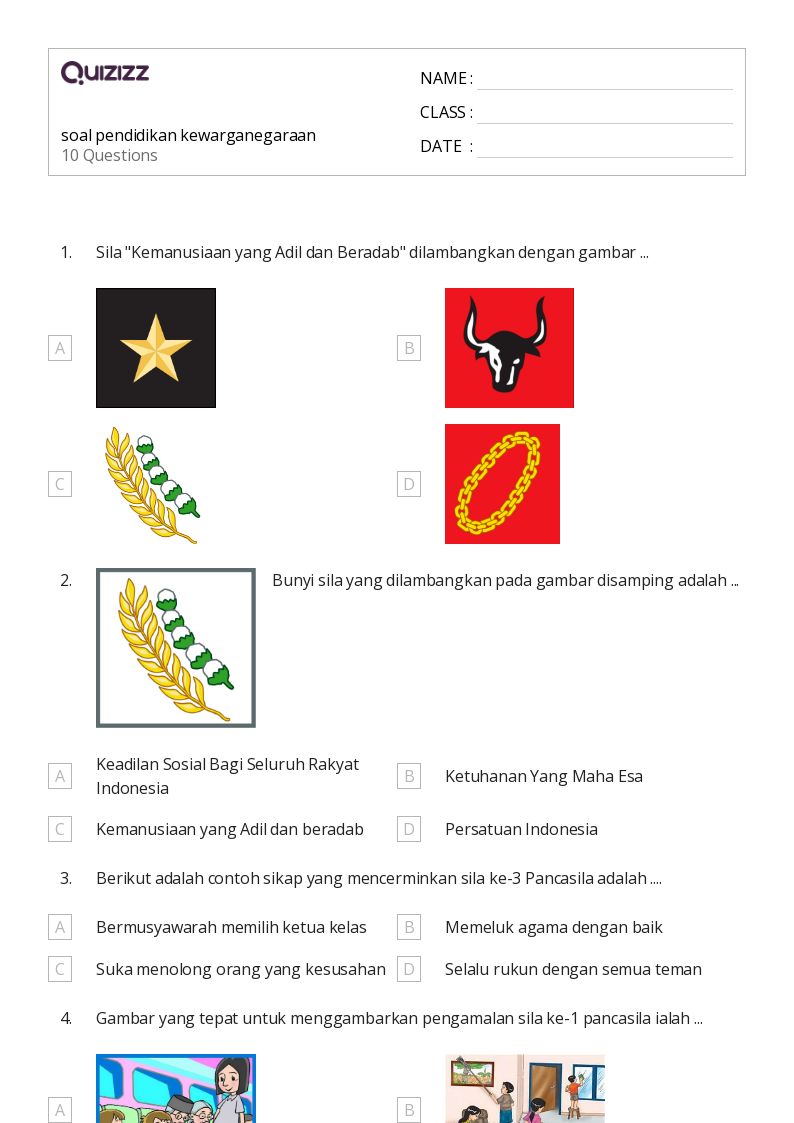
In the vibrant world of elementary education, the development of responsible and informed young citizens is paramount. Citizenship education, particularly at the 3rd-grade level, lays the foundational stones for understanding one’s role within a community, the principles of a nation, and the importance of civic values. It’s not just about memorizing facts; it’s about cultivating a sense of belonging, respect, and active participation. To effectively instill these crucial concepts, engaging and well-structured practice exercises are indispensable. This article delves into the significance of practice questions for 3rd-grade Citizenship, exploring various types of questions, their pedagogical benefits, and providing a comprehensive set of examples designed to reinforce learning and foster a deeper understanding of civic responsibilities.
Why Practice Questions Matter for 3rd Grade Citizenship
At the 3rd-grade level, children are transitioning from basic learning to more nuanced comprehension. They are developing their ability to think critically, understand abstract concepts, and apply knowledge to real-world scenarios. Practice questions serve as a vital bridge in this developmental stage for several key reasons:
- Reinforcement of Learning: Repetition and application are key to solidifying knowledge. Practice questions allow students to revisit concepts learned in the classroom, solidifying their understanding of topics such as national symbols, community helpers, rules and laws, and the importance of good character.
- Identification of Learning Gaps: Through practice, teachers and parents can identify areas where students might be struggling. This allows for targeted intervention and additional support, ensuring no child is left behind.
- Development of Critical Thinking Skills: Well-designed questions go beyond simple recall. They encourage students to analyze, compare, contrast, and infer, fostering the development of essential critical thinking skills that are transferable to all academic subjects.
- Building Confidence: Successfully answering practice questions boosts a child’s confidence in their understanding of citizenship. This positive reinforcement encourages further engagement and a more proactive approach to learning.
- Familiarity with Assessment Formats: Practice questions prepare students for formal assessments, reducing test anxiety and allowing them to focus on demonstrating their knowledge rather than being overwhelmed by the format.
- Promoting Active Recall: Instead of passively re-reading notes, practice questions demand active recall, a more effective method for long-term memory retention.
Key Themes in 3rd Grade Citizenship
Before diving into practice questions, it’s helpful to outline the core themes typically covered in a 3rd-grade Citizenship curriculum. These often include:
- National Identity and Symbols: Understanding the flag, national anthem, national heroes, and the concept of the country.
- Community and Belonging: Identifying different types of communities (school, neighborhood, city), the roles of community members, and the importance of contributing to the community.
- Rules and Laws: Understanding why rules and laws are necessary, distinguishing between rules in school and laws in the community, and the consequences of not following them.
- Rights and Responsibilities: Basic understanding of individual rights and the corresponding responsibilities that come with them.
- Good Citizenship and Character Traits: Emphasizing values like honesty, respect, responsibility, fairness, kindness, and cooperation.
- Civic Participation (Basic): Understanding the concept of voting and how citizens can make their voices heard.
- Diversity and Inclusion: Appreciating differences among people and the importance of treating everyone with respect.
Types of Practice Questions for 3rd Graders
To cater to the learning styles and cognitive abilities of 3rd graders, a variety of question formats are beneficial. Here are some common and effective types:
- Multiple Choice Questions (MCQ): These are excellent for assessing recall and basic comprehension. They offer a clear answer among several options, making it easier for young learners to select the correct one.
- True/False Questions: These questions require students to evaluate statements and determine their accuracy, promoting analytical thinking.
- Fill-in-the-Blanks: This format tests vocabulary and understanding of key terms and concepts within a sentence context.
- Matching Questions: Ideal for connecting related concepts, definitions, or symbols.
- Short Answer Questions: These encourage students to articulate their understanding in their own words, fostering deeper comprehension and expression.
- Scenario-Based Questions: Presenting hypothetical situations that require students to apply citizenship principles to solve problems or make decisions.
- Drawing/Labeling Activities: For visual learners, these can be very effective in understanding symbols or community structures.
Practice Questions: A Comprehensive Set
Let’s explore a variety of practice questions covering the key themes of 3rd-grade Citizenship. These are designed to be engaging and informative.
Section 1: National Identity and Symbols
A. Multiple Choice Questions:
-
What is the name of the flag of our country?
a) The Union Jack
b) The Stars and Stripes
c) The National Banner
d) The National Flag -
What does the color red often symbolize on our national flag?
a) Peace
b) Courage and bloodshed
c) Hope
d) Purity -
What do we sing to show respect for our country?
a) A lullaby
b) A nursery rhyme
c) The National Anthem
d) A birthday song -
Who is a famous national hero known for fighting for freedom? (Example: Soekarno for Indonesia, George Washington for USA. Adapt to your country’s context.)
a) A scientist
b) A musician
c) A national leader
d) A sports star -
The shape of our country on a map represents:
a) A circle
b) Its borders and landmass
c) A star
d) A house
B. True/False Questions:
- The national flag should always be treated with respect. (True/False)
- The national anthem is a song about important events in our country’s history. (True/False)
- It is okay to let the national flag touch the ground. (True/False)
- Our country has a special bird that represents it. (True/False)
- Learning about national heroes helps us understand our country’s past. (True/False)
C. Fill-in-the-Blanks:
- The __ is a symbol of our nation’s pride.
- We stand and sing the __ with respect.
- __ are brave people who helped our country become free.
- The __ of our country shows its shape.
- Our flag has __ that represent different states or ideals.
Section 2: Community and Belonging
A. Multiple Choice Questions:
-
Which of these is a type of community you belong to?
a) Your favorite toy
b) Your school
c) Your pet cat
d) A cloud -
Who helps keep our streets clean?
a) A baker
b) A garbage collector
c) A teacher
d) A doctor -
What is one way to be a good neighbor?
a) Make loud noises at night
b) Help them if they need it
c) Ignore them
d) Play games on their lawn without asking -
A community is a group of people who:
a) Live far apart
b) Share something in common, like living in the same area
c) Only talk to each other online
d) Are all strangers -
What does it mean to contribute to your community?
a) Take things from the community
b) Help make it a better place
c) Only think about yourself
d) Complain about everything
B. Matching Questions:
Match the community helper with their job:
| Community Helper | Job |
|---|---|
| Doctor | a) Teaches students in a classroom |
| Firefighter | b) Helps people who are sick |
| Teacher | c) Puts out fires |
| Police Officer | d) Keeps the community safe |
C. Short Answer Questions:
- Name two places that are part of your community.
- Why are community helpers important?
- Give one example of how you can help your family.
- What is one rule you follow at school?
- How can you show respect to people in your neighborhood?
Section 3: Rules and Laws
A. Multiple Choice Questions:
-
Why do we need rules and laws?
a) To make things confusing
b) To keep people safe and organized
c) To stop people from having fun
d) They are not important -
Which of these is an example of a rule at school?
a) You must pay taxes
b) You must not run in the hallways
c) You must stop at a red light
d) You must not steal -
Laws are rules that are made by:
a) Your friends
b) Your parents
c) The government
d) Your teacher -
What might happen if people don’t follow traffic laws?
a) Nothing at all
b) Accidents could happen
c) The roads become smoother
d) Everyone gets a prize -
Who helps to enforce laws in our community?
a) Doctors
b) Librarians
c) Police officers
d) Chefs
B. True/False Questions:
- Rules in school are the same as laws in the country. (True/False)
- Following rules helps prevent problems. (True/False)
- It is okay to break a rule if no one sees you. (True/False)
- Laws are created to protect everyone. (True/False)
- A red traffic light means "Go." (True/False)
C. Fill-in-the-Blanks:
- We follow __ at school and __ in our community.
- Traffic __ help cars and people move safely.
- If you break a __ or a law, there are often consequences.
- The __ makes the laws for our country.
- Following rules keeps our community __ and orderly.
Section 4: Rights and Responsibilities
A. Multiple Choice Questions:
-
Which of these is a basic right of a child?
a) The right to always get what you want
b) The right to be safe and cared for
c) The right to not do chores
d) The right to stay up all night -
What is a responsibility?
a) Something you are allowed to do
b) Something you are expected to do
c) Something you are forced to do
d) Something you wish for -
If you have the right to speak, what is your responsibility?
a) To shout all the time
b) To speak kindly and respectfully
c) To only talk about yourself
d) To not speak at all -
Going to school is a:
a) Right
b) Responsibility
c) Both a right and a responsibility
d) Neither a right nor a responsibility -
What is a responsibility you have at home?
a) To eat all your vegetables (sometimes a responsibility, sometimes not)
b) To help with chores
c) To play video games all day
d) To never clean your room
B. Scenario-Based Questions:
- Imagine you are playing with a friend and they accidentally break your toy. You have the right to be upset, but what is your responsibility in this situation?
- You have the right to play outside. What is a responsibility you have while playing outside?
- Your teacher gives you an assignment. You have the right to learn, but what is your responsibility towards the assignment?
Section 5: Good Citizenship and Character Traits
A. Multiple Choice Questions:
-
Which of these is a sign of good character?
a) Lying to get out of trouble
b) Being honest even when it’s difficult
c) Cheating on a test
d) Being mean to others -
What does it mean to be respectful?
a) To ignore other people’s feelings
b) To treat others with consideration and politeness
c) To always agree with everyone
d) To only listen to yourself -
If you promise to do something, what is your responsibility?
a) To forget your promise
b) To keep your promise
c) To make excuses
d) To do it only if you feel like it -
Kindness is shown by:
a) Being rude
b) Helping others and being friendly
c) Taking things that don’t belong to you
d) Complaining a lot -
Cooperation means:
a) Working alone all the time
b) Working together with others to achieve a goal
c) Arguing with everyone
d) Ignoring others
B. Fill-in-the-Blanks:
- Being __ means telling the truth.
- When you are __ to others, you make them feel good.
- Taking __ means doing what you say you will do.
- Fairness means treating everyone the __ way.
- __ helps us solve problems together.
C. Short Answer Questions:
- Give an example of being honest.
- How can you show respect to your elders?
- Why is it important to be kind to animals?
- Describe a time you cooperated with someone.
- What is one way you can be a responsible student?
Conclusion
Equipping 3rd graders with a solid understanding of citizenship is an investment in the future. Through consistent and varied practice, these young learners can transform abstract concepts into actionable knowledge. The practice questions provided in this article aim to offer a comprehensive tool for educators and parents to reinforce learning, identify areas for growth, and most importantly, cultivate a generation of engaged, responsible, and proud citizens. By making citizenship education engaging and accessible, we empower our children to understand their place in the world and to actively contribute to building a better society for all. Remember, the journey of becoming a good citizen begins with understanding and practicing these fundamental principles, starting from a young age.